
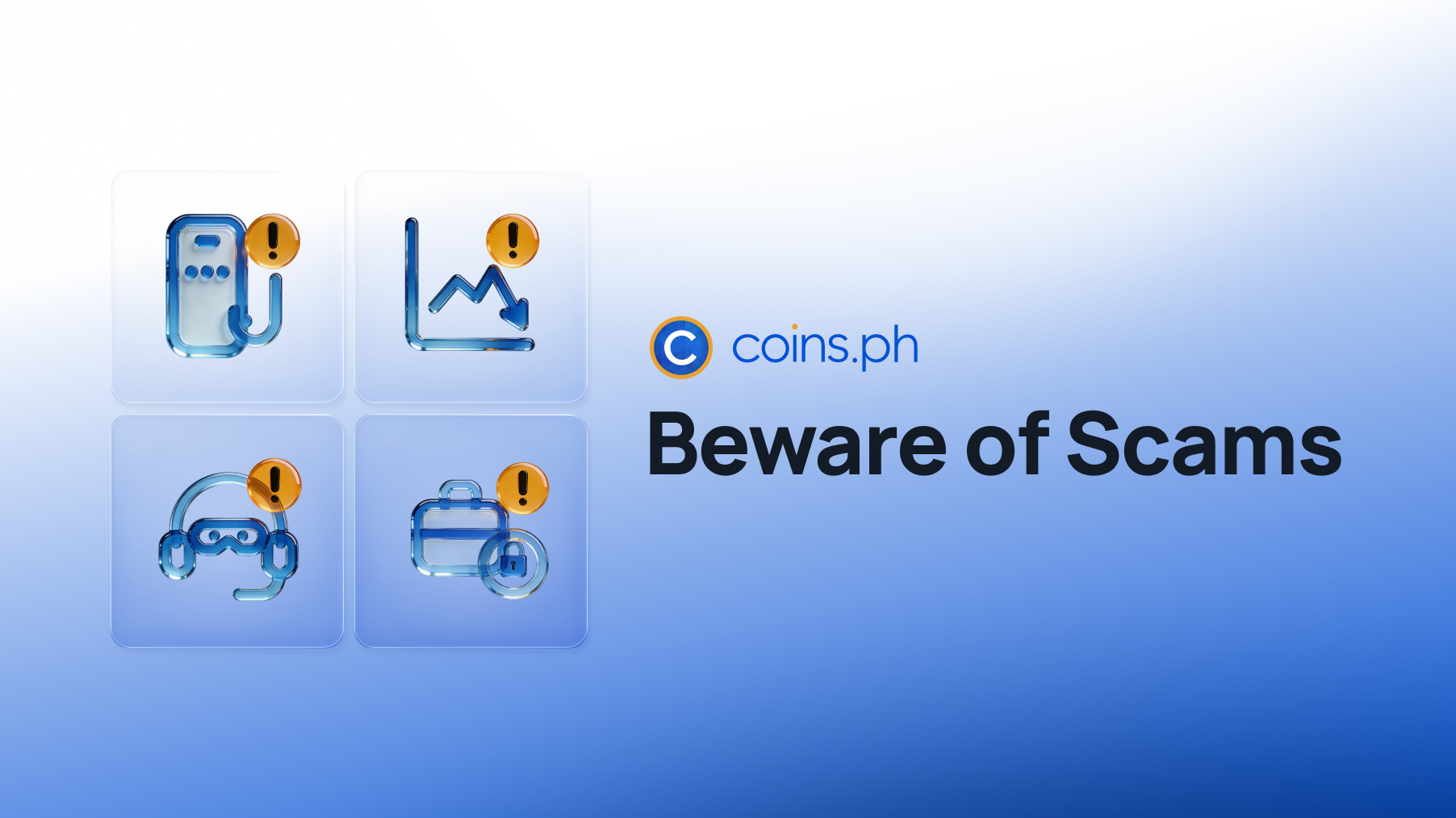
In observance of International Fraud Awareness Week, Coins.ph—the largest digital asset exchange and a rapidly expanding mobile wallet in the Philippines—is cautioning users against four prevalent scam tactics as bad actors increasingly target digital platforms, including the crypto platforms and e-wallets, people rely on for savings, bill payments, and money transfers.
Beyond this advisory, Coins.ph is also sponsoring the 14th National Fraud Conference of the Association of Certified Fraud Examiners (ACFE) Philippines Chapter, which brings together fraud examiners and compliance professionals to strengthen how organizations detect and report fraud.
Citing data from the Global Anti-Scam Alliance’s (GASA) State of Scams Philippines Report 2026 , produced with Mastercard and Gogolook, Coins.ph notes that 84% of Filipino adults had encountered a scam in the past year, up from 77%. GASA estimates annual losses nationwide at ₱121.8 billion. Scammers’ use of e-wallets to move stolen money rose from 34% to 73% over the same period.
A separate report from the Cybercrime Investigation and Coordinating Center (CICC) meanwhile shared that the agency received 18,633 cybercrime complaints in 2025, up from 10,004 in 2024. Reported losses from fraud, hacking and phishing reached ₱418.2 million, more than double the roughly ₱198 million recorded the year before.
Crypto is a prime target worldwide. Blockchain analytics firm Chainalysis estimates that crypto scams took in as much as $17 billion in 2025 with impersonation scams up by 1,400%. The most common schemes rarely involve hacking. They rely on persuading people to hand over their login details, their one-time PINs or the money itself.
“Most scams don’t break into an account. They convince the account owner to open the door,” said Amira Alawi, Global Marketing Director at Coins.ph. “Our team works every day to catch fraud before it reaches our users. The best protection, though, is a user who can recognize a scam the moment it shows up.”
Some of the most common scams include the following:
1. Texts and links that ask for your one-time PIN A text that appears to come from Coins.ph warns that the account has been locked and asks the user to “verify” it through a link. The link opens a fake login page, and anything typed into it, including the one-time PIN (OTP), goes straight to the scammer.
This is the most common attack Filipinos face. Credit Bureau TransUnion found that 72% of Filipino consumers were targeted by digital fraud from August to December 2025, against 53% globally. Phishing (45%) and fraudulent text messages (38%) were the schemes they reported most. Login is the riskiest moment: 6.1% of login attempts in the Philippines were flagged as suspected fraud in 2025.
Warning signs include urgency, a link that does not lead to the official Coins.ph website, and any request for an OTP, password or recovery phrase.
“An OTP is the last lock on your account, and nobody at Coins.ph will ever ask you for it,” Alawi said. “If a message asks for your OTP, it is a scam, no matter how official it looks.”
2. Fake customer support on social media When users post a complaint online, accounts using the Coins.ph logo and names like “Coins Support” often reply first. They then move the conversation to private messages, Telegram or WhatsApp, where they ask for login details, request remote access to the user’s phone or tell the user to move funds to a “safe” wallet.
Private messaging is where most scams happen: GASA found that 88% of scam attempts in the Philippines took place on platforms with a direct-message function. Coins.ph support will never ask users for their login details or OTP, request remote access to their phone, or tell them to transfer funds to resolve an account issue. Users should contact support only through the official Coins Help Center or its official channels.
3. Investments that promise guaranteed returns These schemes promise fixed daily or weekly earnings, often from a “trading bot” that supposedly cannot lose. Early investors may see their balance grow, but when they try to withdraw, they are told to pay a fee first, and the platform eventually disappears.
Crypto investment fraud was the single costliest type of cybercrime reported to the FBI in 2025, at $7.2 billion in losses. Many of these schemes are run from scam compounds in Southeast Asia. Warning signs include guaranteed or unusually high returns, pressure to invest quickly and rewards for recruiting others.
“Real investments carry risk, and nobody can honestly promise you a fixed return on crypto,” Alawi said. “If someone guarantees your profit, that guarantee is a scam.”
4. Online tasks or jobs that pay in crypto Offers of easy work from home, such as liking videos or rating products, arrive through Viber, Telegram or social media. The first payments come quickly, often in the stablecoin USDT, but the “employer” soon asks for deposits to unlock bigger tasks, and the promised earnings can never be withdrawn.
A real job pays you; it never asks you to pay to keep working. Students and young professionals are frequent targets, so it is worth sharing this warning with friends and family.
Never lend or sell your account Scammers need “mule” accounts to move stolen money, and they often pay people to lend, rent or sell a verified e-wallet or bank account. Under the Anti-Financial Account Scamming Act (Republic Act No. 12010), letting a scammer use your account is a crime, even if you never meet the victim.
What to do if targeted Anyone who suspects a scam should stop replying and avoid sending more money, even if the scammer promises a refund. They should change their password and report the incident through the official Coins Help Center. Scams can also be reported to the CICC through its hotline 1326 and to the Philippine National Police Anti-Cybercrime Group.
Few victims do. Only 4% of Filipinos who were scammed reported it to authorities, according to reports.
“Reporting quickly gives us the best chance to act,” Alawi said. “The checks we run inside Coins.ph are only part of keeping people safe. Sharing what we see with our users and the wider community is how that protection reaches further.”