

Stablecoins might sound like jargon reserved for "crypto bros" or high-finance executives, but the reality is far more grounded. For the millions of Filipinos who rely on money from abroad—and the growing army of freelancers and MSMEs working with global clients—this technology is the long-awaited solution to a decades-old headache.
In the Philippines, where remittances are a lifeline and the gig economy is booming, the traditional way of moving money is increasingly looking like an ancient relic.
The ‘Lola’ and the Freelancer: Why Traditional Rails Hurt
Picture this: Your Lola in the US wants to send you $100 (approx. ₱5,600) to celebrate your recent promotion. Simultaneously, a Filipino freelance graphic designer is waiting for a $1,000 payment from a client in London.
Both face the same "middleman tax." Because they use traditional bank wires or legacy remittance centers, they experience:
- The 3-to-5-Day Lag: Banking hours, weekends, and public holidays stop money in its tracks.
- The Intermediary "Black Box": Traditional cross-border payments move through a "correspondent banking" chain. Your money doesn't fly directly from New York to Manila; it hops through 3–4 different banks, each taking a $10–$30 "processing fee" and a cut of the exchange rate spread.
- The Fee Gut-Punch: The World Bank notes the global average cost to send money is still 6.4%.
What You Could Have Bought Instead
In the Philippines, "lost" fees aren't just numbers—they are missed opportunities. On a $100 remittance, that $6.40 (₱360) in fees could have bought:
- Two to three large iced coffees from a premium cafe.
- A family-sized fast food bucket of fried chicken.
- An extra 5kg bag of premium rice for the pantry.
For the freelancer losing $60 on a $1,000 invoice, that’s a weekly meal budget for a family of four or a month's worth of high-speed internet gone to bank fees.
Enter the Stablecoin: The Fast Lane for Business and Family
A stablecoin is a digital currency pegged 1:1 to a stable asset, usually the US Dollar (like USDT or USDC). Unlike most crypto tokens, a stablecoin doesn't "moon" or "crash"; it stays at $1. But because it lives on the blockchain, it moves at the speed of the internet.
Direct and Instant Movement
Stablecoins bypass the entire correspondent banking labyrinth. Instead of moving through a chain of gatekeepers, they move on a blockchain. This allows for:
- Near-Instant Speed: While banks process transactions in batches, blockchain networks can handle thousands of transactions per second (TPS), settling in minutes.
- 24/7 Availability: The blockchain doesn’t sleep for Sundays or Philippine National Holidays.
- 90% Cost Savings: Stablecoin transaction costs are typically under 1%. Instead of losing $6.40, you pay pennies.
A Strategic Tool for Business and MSMEs
For merchants and exporters, stablecoins are becoming the "liquidity of choice."
1. Cash Flow Freedom: Traditional wires create "float"—money stuck in transit. Stablecoins allow a Filipino exporter to receive payment from Europe at 11:00 PM on a Friday and immediately use those funds to pay a supplier.
2. Global Reach: Small businesses can accept payments from customers in Dubai, Singapore, or Hong Kong as easily as a local bank transfer.
“Stablecoins are the bridge between the traditional financial world and the digital future," says Amira Alawi, Global Marketing Director of Coins.ph.
"For the end-user—whether a family, a freelancer or a merchant—this isn't about complexity; it's about dignity and value. It’s about ensuring that hard-earned money reaches its destination in full, instantly, without being eroded by legacy systems built for a pre-internet era."
The Industry Shift: By the Numbers
This isn't just theory; it's a massive shift in the finance ecosystem. Coins.ph, the country's leading crypto-native platform, saw its trading volume reach $500 million in November alone. By February 2026, daily spot volume hit $50 million, fueled almost entirely by the demand for stablecoins for real-world utility.
Regulatory clarity is finally providing the "legal scaffolding" for this growth. With frameworks like the GENIUS Act in the US and MiCA in Europe, traditional financial institutions are treating stablecoins as core infrastructure.
The Verdict
Whether you’re a daughter waiting for her padala or a small business owner scaling globally, the choice is clear: leave your money in a "black box" for five days, or take the fast lane with stablecoins and keep your hard-earned rewards.
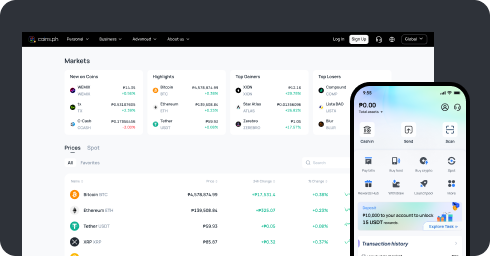
To learn how you can trade stablecoins on Coins.ph, contact the Official Help Center.