
It’s 8:00 AM on a Sunday in Manila. While the skyscraper-bound servers of the global banking elite are dark for the weekend, a freelance graphic designer is settling her monthly rent. She isn't waiting for a wire transfer to clear or a middleman to take a 7% cut. With a few taps, she sends USDT—a digital asset pegged to the US dollar—across a border as easily as sending a text message. By 8:05 AM, the transaction is settled.
This experience is an indicator of the shifting global crypto landscape. While the West spent years obsessed with market volatility and moon shots, Southeast Asia is quietly building a parallel reality. In the region, digital assets—specifically stablecoins—have evolved from risky bets into the essential machinery of daily commerce.
The Southeast Asian Mandate: Utility Over Hype
This transition from speculation to practical utility is anchored by three undeniable pillars:
- Financial Inclusion via Infrastructure: In a region where millions remain underbanked, crypto isn't a luxury—it’s becoming a necessity. It now offers a financial system that allows families to receive money at the speed of the internet, outpacing traditional banking by days.
- The Stability of the Dollar, the Speed of the Chain: By pegging digital assets to the US Dollar or local currencies, the region has effectively neutralized the fear of market volatility. What remains is pure utility: a stable medium of exchange that doesn't lose value overnight.
- Institutional Adoption: This isn't just for individuals. Large-scale enterprises are now using institutional rails to integrate blockchain for B2B settlements, moving toward a world of high-velocity, real-world payments.
"The conversation has shifted from market volatility to real-world infrastructure," says Wei Zhou, CEO of Coins.ph. "In this region, cryptocurrency has transitioned from a speculative store of value into the essential liquidity that keeps our financial systems running 24/7, 365 days a year," says Wei Zhou, CEO of Coins.ph, the largest digital asset exchange in the Philippines, which also has footprint in Australia, Latin America, Africa and Europe.
The Power Players: Philippines and Thailand
The 2025 Chainalysis Global Crypto Adoption Index underscores this momentum, ranking the Philippines #9 and Thailand #15 globally. These aren't just numbers; they represent a massive demographic shift.
Both nations share a common DNA: large migrant worker populations and a booming digital gig economy. In the Philippines, Coins.ph recently reported a 20% surge in trading volume, driven almost entirely by stablecoin activity. With 10 million Overseas Filipino Workers (OFWs) sending money and 1.5 million freelancers receiving payments from overseas, the demand for "crypto-active" solutions is a matter of economic survival.
Thailand has mirrored this trajectory. Stablecoin transactions now account for nearly 45% of all regional on-chain activity. Thai users are no longer willing to tolerate the multi-day waiting periods and opaque fees of legacy banks when a digital alternative exists at their fingertips.
Coins.ph: Building Continuity Infrastructure
Operating at the heart of this corridor, Coins.ph is doing more than facilitating trades—it is dismantling the barriers of the old guard.
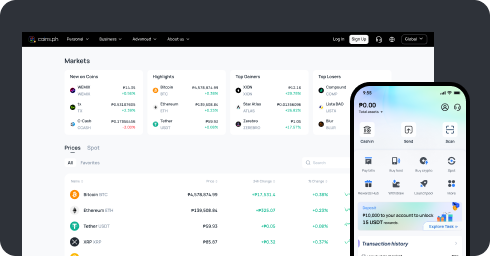
By partnering with global money transfer companies and enabling users to receive remittances in both the Philippines and Thailand using its app, Coins.ph ensures that a worker’s hard-earned money reaches their family instantly and transparently since stablecoin rails allows for near-time transfers, at fees much lower than traditional remittance methods.
Unlike the SWIFT network, which effectively "pauses" on weekends and holidays, Coins.ph also provides 24/7 settlement.bridging local currency-to-crypto liquidity, and creating a secure, licensed gateway for both the grandmother in a rural village and the institutional fund in the city.
"Our mission is to build the continuity infrastructure for the Philippines and Thailand," Zhou explains. "We are bridging the gap between traditional fiat and the borderless efficiency of the blockchain."
A Regional Ripple Effect
While the Philippines and Thailand lead the retail charge, the rest of Southeast Asia is playing a sophisticated game of specialized growth:
- Singapore: Acting as the regulatory North Star, Singapore has established world-class frameworks for B2B settlements. It is currently positioned to manage an estimated $150 billion in institutional liquidity by 2027.
- Indonesia : With its massive population spread across thousands of islands, Indonesia saw a 32% year-on-year increase in small-value digital asset transactions in 2024, proving that stablecoins are the perfect tool for micro-remittances.
- Cambodia: The success of Project Bakong has normalized digital tokens for daily life. With over $20 billion in digital payment volume annually, Cambodia has created a fertile environment where the line between "crypto" and "cash" has already begun to blur.
The 2030 Projection: The Era of Invisible Finance
By 2030, stablecoins are projected to capture up to 30% of the global remittance market. In Asia alone, stablecoin-backed transactions are expected to hit $250 billion by 2028.
The "next billion users" in crypto won't be Wall Street day traders or Silicon Valley insiders. They will be Southeast Asian SMEs paying their suppliers and families purchasing groceries. As these digital corridors harden into permanent infrastructure, the conversations will likely shift from just crypto into a more inclusive "finance." We are moving into an era of a high-speed, global economy, one where the underlying technology ensures that money operates continuously, without pause.
About Coins
Coins is building the next generation of global money movement. Through a single platform, businesses and consumers can make payments, move money across borders, convert currencies, access digital assets, and tap into a growing suite of financial services — from cards and credit to investments and treasury. By combining stablecoin-powered settlement with local payment rails, Coins makes money move faster, at lower cost, and with 24/7/365 availability.