
Choosing the right wallet no longer means picking the right material, color, or number of card slots. In today's digital economy, the modern wallet lives inside a smartphone. With dozens of platforms available, Filipino users must navigate a wide range of options, from widely used e-wallets such as GCash and Maya to platforms like Coins.ph, which stands out for integrating cryptocurrency and digital payments, including direct crypto payments via QRPH starting April 20. What was once a simple accessory has evolved into an essential financial tool for paying bills, transferring funds, shopping online, and scanning QR codes for everyday purchases using just one e-wallet.
The Philippine Context: E-Wallet Adoption and How It's Growing
In the Philippines, where nearly 49.8% of Filipino adults remained unbanked, e-wallet adoption is rapidly gaining momentum and is expected to continue growing in the coming years. Efforts by the Bangko Sentral ng Pilipinas to expand digital payments—particularly through the widespread use of QR Ph—have helped accelerate this shift. By 2025, the number of registered e-wallet accounts had increased significantly compared to previous years, reflecting rising demand for accessible financial services.
This growth has been further supported by increasing adoption of cashless payments among merchants, from small businesses to large retailers. In 2024, digital retail payments accounted for 57% of transaction volume and 59% of total retail transaction value, highlighting the country's steady transition toward a cashless economy. Despite this progress, challenges remain, including financial literacy gaps, security concerns, and lower adoption rates among rural communities and older populations.
To better understand their differences and determine which platform best fits your needs, here's an overview of the top e-wallets in the Philippines.
Comparing Features and Services of Top E-Wallets
Coins.ph
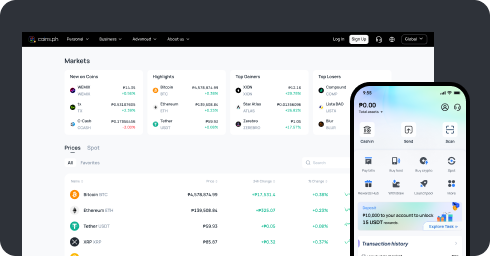
With millions of registered users in the Philippines, Coins.ph stands out for integrating cryptocurrency services with everyday financial transactions. Starting April 20, it became the first and only e-wallet in the Philippines that allows direct crypto payments using QRPH. This feature allows users to make purchases and payments directly using stablecoins, namely USDT and USDC, with more tokens on the way. This first-of-its-kind payment feature is in addition to standard features such as money transfers, bill payments, and mobile load purchases, positioning it as a powerful e-wallet with true crypto-fiat versatility.
Coins.ph is particularly popular among freelancers and Overseas Filipino Workers, as it offers relatively low transfer costs and near-instant settlement for remittances processed through stablecoin rails. Coins.ph also supports both PESONet and InstaPay, and is known for lower InstaPay transfers, typically around ₱10 when sending to over 120 banks or other e-wallets. It is well suited for users interested in trading who also need to manage payments, as it uniquely integrates crypto wallets, fiat-to-crypto conversion, and cross-border transactions with reduced intermediaries. The platform also features crypto-to-PHP conversions, enabling users to withdraw digital assets into local currency.
GCash
GCash is the largest e-wallet in the Philippines, with around 94 million registered users as of 2025, and has a high level of merchant acceptance. It offers a range of services including savings, microloans, insurance, and investment options. It supports both PESONet and InstaPay, allowing users to transfer funds conveniently across banks and e-wallets.
Transfers between GCash users are free, while transfers to other banks and e-wallets via InstaPay typically incur a fee of ₱15. Cash-in transactions are often free, although fees may apply depending on the source bank or channel used. Cash-out fees are commonly around 2% of the withdrawn amount, while ATM withdrawals typically incur a fixed fee of ₱18.
Maya
Maya, formerly known as PayMaya, has over 20 million users and is recognized for combining e-wallet functionality with digital banking services such as interest-earning savings, credit, and investments. It also offers credit card options that allow users to earn rewards, including miles for travel-related spending, manageable directly within the app.
The platform integrates standard payment features and banking features. It supports both PESONet and InstaPay, with InstaPay transfers to banks and other e-wallets typically costing ₱15 per transaction. Cash-in fees are generally determined by the sending institution, while cash-outs via partner banks usually range from ₱10 to ₱18.
GoTyme
GoTyme is a newer digital bank with over 3 million users as of 2024, recognized for its savings-focused features and accessible cash-in options through retail partners. It combines e-wallet functionality with banking services, offering insured savings accounts, budgeting tools, and a structured approach to managing personal finances.
GoTyme supports both PESONet and InstaPay for fund transfers, offering up to 20 free InstaPay transactions per month for transfers of up to ₱50,000. Beyond this limit, a fee of ₱9 per transaction is applied, making it one of the more cost-efficient options for frequent transfers.
GrabPay
GrabPay is widely used within the Grab ecosystem and is primarily known for enabling seamless payments for ride-hailing, food delivery, and partner merchants. While its broader financial services are more limited compared to other e-wallets, it provides a convenient payment method for users already engaged with the platform, along with access to selected services such as insurance.
Transactions within GrabPay are often free, particularly for in-app payments. The app supports both PESONet and InstaPay, with InstaPay transfers to banks and other e-wallets typically incurring a fee of ₱15. Its strength lies in tight integration with everyday services, making it a practical option for frequent Grab users.
ShopeePay
Closely integrated with the Shopee platform, ShopeePay is known for its strong e-commerce integration and frequent cashback and voucher incentives. It supports QR payments, bank transfers, and bill payments, but its primary use remains within the Shopee ecosystem, making it particularly useful for frequent online shoppers.
The app supports both PESONet and InstaPay. Transfers to other e-wallets and banks via InstaPay typically cost ₱15 per transaction, with similar fees applied to cash-out services. While its financial features are more limited compared to other platforms, ShopeePay remains competitive through its rewards-driven ecosystem.
Lazada Wallet
Lazada Wallet is an in-app e-wallet primarily used within Lazada and is known for supporting buy-now-pay-later transactions and offering shopping-related rewards. It is commonly used for paying bills, purchasing mobile load, and completing transactions within the platform.
The app supports both PESONet and InstaPay. Transfers to other e-wallets and banks typically incur a fee of around ₱15, making it one of the more affordable options for occasional fund transfers. However, its functionality remains largely centered around the Lazada ecosystem.
Final Verdict
Ultimately, choosing the right e-wallet depends on how users intend to manage and use their money. Platforms like GCash and Maya offer the most comprehensive range of services, making them suitable for everyday transactions and broader financial needs. Meanwhile, Coins.ph emerges as a powerful e-wallet that combines the functionality of an e-wallet with that of a digital asset exchange, making it easier for users who engage in crypto-trading, as well as for overseas Filipinos and gig-workers who use stablecoin-powered remittances.
On the other hand, ecosystem-based wallets like GrabPay, ShopeePay, and Lazada Wallet prioritize convenience within their respective platforms, offering seamless payments and rewards for frequent users. Newer entrants such as GoTyme highlight the growing shift toward integrating digital banking with e-wallet functionality.
As e-wallet adoption continues to expand in the Philippines, no single platform can fully meet every need. Instead, the best choice depends on a user's priorities—whether it is accessibility, cost-efficiency, financial services, or ecosystem integration. Understanding these differences allows users to make more informed decisions in an increasingly digital financial landscape.
Frequently Asked Questions
Is Coins.ph the only e-wallet in the Philippines with crypto payments via QRPH?
Yes. Starting April 20, Coins.ph became the first and only e-wallet in the Philippines that allows direct crypto payments using QRPH, letting users pay with stablecoins such as USDT and USDC.
How much does Coins.ph charge for InstaPay transfers?
Coins.ph InstaPay transfers typically cost around ₱10 when sending to over 120 banks or other e-wallets, which is lower than the ₱15 fee common among GCash, Maya, GrabPay, ShopeePay, and Lazada Wallet.
Which e-wallet in the Philippines has the most registered users?
GCash is the largest, with around 94 million registered users as of 2025, followed by Maya with over 20 million users and GoTyme with over 3 million users as of 2024.
Why is Coins.ph popular among OFWs and freelancers?
Coins.ph offers relatively low transfer costs and near-instant settlement for remittances processed through stablecoin rails, making it a practical option for Overseas Filipino Workers and freelancers who send or receive cross-border payments.
Does Coins.ph support PESONet and InstaPay like other e-wallets?
Yes. Coins.ph supports both PESONet and InstaPay for fund transfers, similar to GCash, Maya, GoTyme, GrabPay, ShopeePay, and Lazada Wallet, but with lower InstaPay fees around ₱10.